
Reviewed by: Alan Ely, Production Manager
Last updated: July 3, 2026
Why Low vs Zero VOC Paint Confuses Most Buyers
If you’ve ever compared low VOC in paint, low or zero VOC paint, or paint with no VOC, you’ve likely noticed that labels don’t match real-world results.
The key question is:
What does VOC mean on paint — and how does it actually impact a commercial project?
This becomes especially critical after tinting, when zero VOC paint often no longer remains zero in real applications.
In commercial environments, this directly affects:
- scheduling
- reoccupancy timelines
- compliance
- lifecycle cost
At Nomad Coatings, we see this on active sites — including Highland Park ISD facilities, where coatings must perform under occupancy constraints.
“In commercial work, VOC isn’t about smell — it’s about whether the building can be used on schedule.” — Andrey Shelokovskiy
Quick Definition: What Does VOC Mean on Paint?
VOC (volatile organic compounds) are chemicals in coatings that evaporate during and after application.
The VOC in paint definition is measured in grams per liter (g/L) and reflects regulated emissions — not total toxicity.
In simple terms:
Paint VOC meaning = how much chemical content becomes airborne during curing.
Takeaways: What You Need to Know Before Buying
- Low VOC paint reduces emissions but is not chemical-free
- Zero VOC paint's meaning changes after tinting
- Low or no-VOC paint ≠ non-toxic paint
- VOC-free paint still contains other compounds
- Indoor air quality depends on ventilation, not just VOC levels in paint
“VOC is just one variable. The system — airflow, schedule, product — determines the outcome.” — Alan Ely, Production Manager
What Is VOC in Paint?
What is paint VOC?
It refers to the amount of volatile organic compounds released into the air from paint during drying and curing. This is measured in g/L and regulated, but does not fully define air quality.
What are VOC paints used for?
They:
- improve flow and leveling
- enhance adhesion
- speed up drying
Without VOCs:
- Coatings may require more coats
- Application becomes less forgiving
VOC vs odor: why “low smell” is misleading
- Low odor paint ≠ low VOC
- No fume paint ≠ no emissions
Products labeled:
- low odor paint lowes
- fume-free paint
- low fume paint
…may still emit compounds.
“We’ve had jobs with no smell but still restricted occupancy. Odor is not a reliable indicator.” — Alan Ely, Production Manager
VOC levels explained (voc for paint)
Typical ranges:
- Standard coatings: 150–250 g/L
- Low voc paints / low vocs: <50 g/L
- 0 voc paints / paint without voc: <5 g/L (base only)
Low VOC Paint Explained (what is low voc paint)
What does low VOC paint mean?
What does low VOC paint mean?
Paint with reduced volatile organic compounds that meet regulatory limits.
Also called:
- low-volatile organic compound paint
- low-emission paint
Low VOC paint vs regular paint
| Factor | Low VOC Paint | Regular Paint |
|---|---|---|
| Emissions | Lower | Higher |
| Coverage | May require more coats | Stronger |
| Compliance | Easier | Limited |
Real Project Example: Highland Park High School
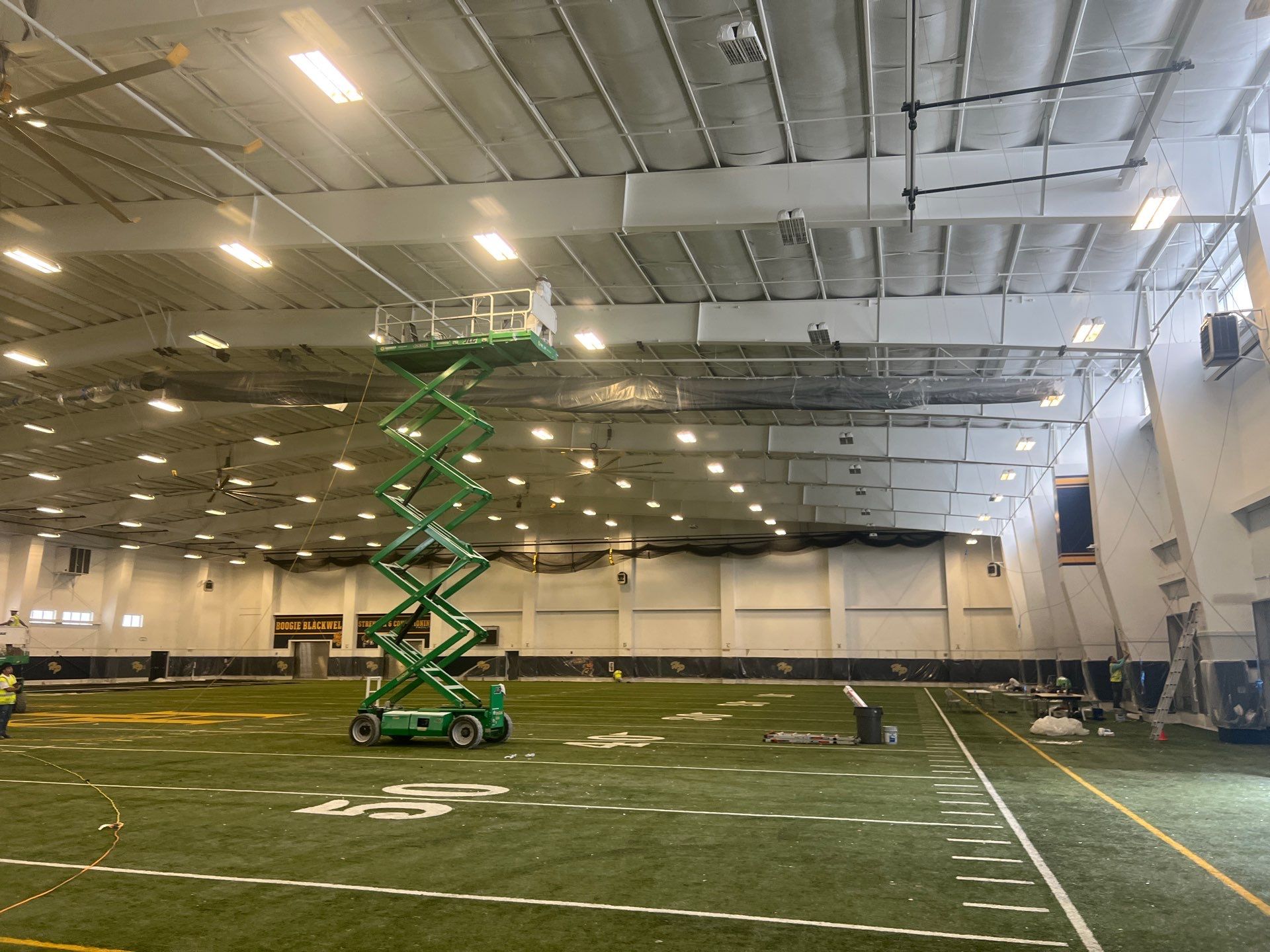
On a Highland Park ISD project, the requirement was:
- maintain building operation
- minimize downtime
- control indoor air quality
We used low VOC interior paint systems with:
- phased scheduling
- ventilation control
- overnight curing windows
“The priority wasn’t just low VOC — it was zero disruption to school operations.” — Andrey Shelokovskiy
Low vs Zero VOC vs Regular Paint: Side-by-Side Comparison
VOC levels
- Regular → highest
- Low VOC → regulated
- Zero VOC → base only
Coverage and durability
- Low VOC house paint / low VOC interior paint
→ may need more coats - Regular coatings
→ stronger hiding power
Off-gassing reality
- No fume paint ≠ instant safe use
- curing still required
Lifecycle cost
- Zero VOC → higher material + labor
- Low VOC → balanced
- Regular → lower upfront, possible delays
Health Risks: What the Labels Don’t Fully Explain
Short-term exposure
- headaches
- irritation
High-risk environments
- schools
- healthcare
- occupied buildings
Indoor air quality vs VOC numbers
VOC compliance ≠ air quality
“Ventilation strategy matters more than the VOC label.” — Alan Ely, Production Manager
The Tinting Factor: Why “Zero VOC” Changes
Base vs tint
Colorants add VOC.
What to ask suppliers
- final VOC level
- documentation
Low VOC Paint at Lowe's: What to Know
Common searches:
- low VOC paint at Lowe's
- Lowe's low-VOC paint
- Lowes no VOC paint
- non-VOC paint Lowe's
- Lowe's non-toxic paint
Ask:
- Final VOC after tint
- real g/L values
Field Insight: Where VOC Assumptions Go Wrong
“We’ve seen projects where clients chose zero voc paint expecting immediate use, but without proper ventilation, downtime was still required. VOC alone doesn’t define usability.” — Alan Ely, Production Manager
Performance Reality: Why Low VOC Paint Can Cost More
Why are more coats needed
Lower VOC:
- different binders
- lower solids
Sheen and durability
Higher sheen:
- better durability
- sometimes higher VOC
Budget Strategy: Where to Spend
Use zero VOC when:
- The building is occupied
- Downtime must be minimal
Use low VOC when:
- standard commercial interiors
Use regular coatings when:
- industrial or exterior
- occupancy is not a concern
Commercial Case: Turley Law High-Rise
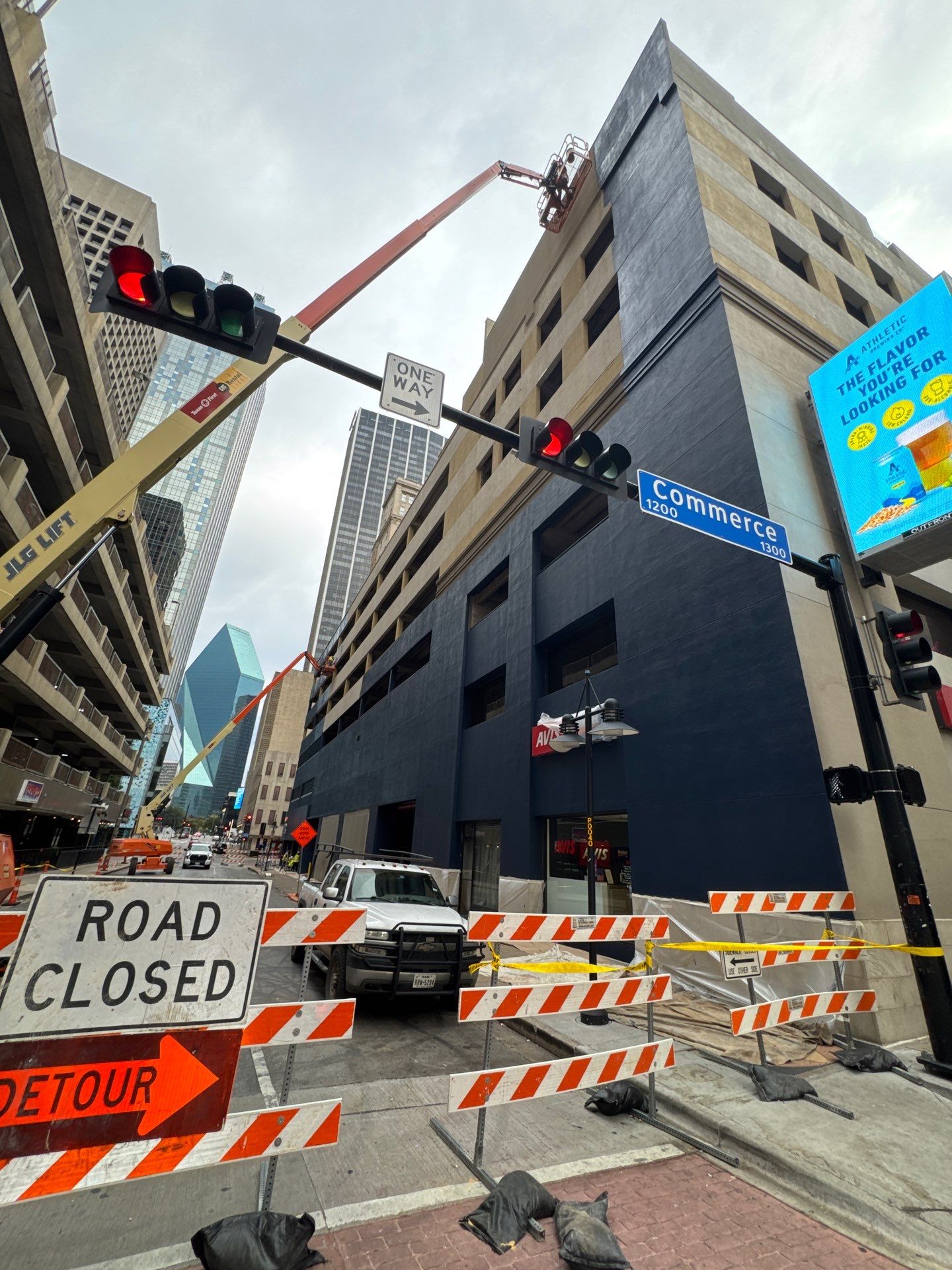
On the Turley Law facade project, VOC was not the main driver.
Priorities were:
- coating durability
- weather resistance
- system performance
This illustrates:
Voc and paint selection must align with project type, not just labels.
How to Verify VOC Claims
Step 1: Check the label
Look for g/L — not marketing terms.
Step 2: Review SDS/TDS
Confirm:
- voc paints values
- system requirements
Step 3: Understand limits
What is VOC-free?
There is no truly “chemical-free” paint — only lower emission systems.
Reduced VOC levels compared to standard coatings.
Planning a Painting Project? Let’s Get It Right the First Time.
Choosing between low-VOC paints, zero voc paints, and standard coatings is only part of the equation.
The real impact comes from:
- surface prep
- application method
- ventilation
- system selection
Wrong assumptions about VOC can lead to:
- delays
- cost overruns
- performance issues
If you're planning a commercial project, we’ll help you define the right system from the start.
Get Your Free Commercial Estimate
Managing or upgrading a property in Dallas–Fort Worth?
Our team will calculate a detailed, transparent estimate tailored to your building type, coating system, and schedule — without interrupting your daily operations.
Call us at (817) 382‑6004 or drop us a note through the Contact form. We’ll set up a walkthrough or review your plans, and get you a clear proposal. Let’s get it done right the first time.